For hopefully obvious reasons, I belong to the Little Big Horn Association, an organization of Custerphiles. Belonged to them when I started doing my research but never went to one of their annual conferences. Until this year.
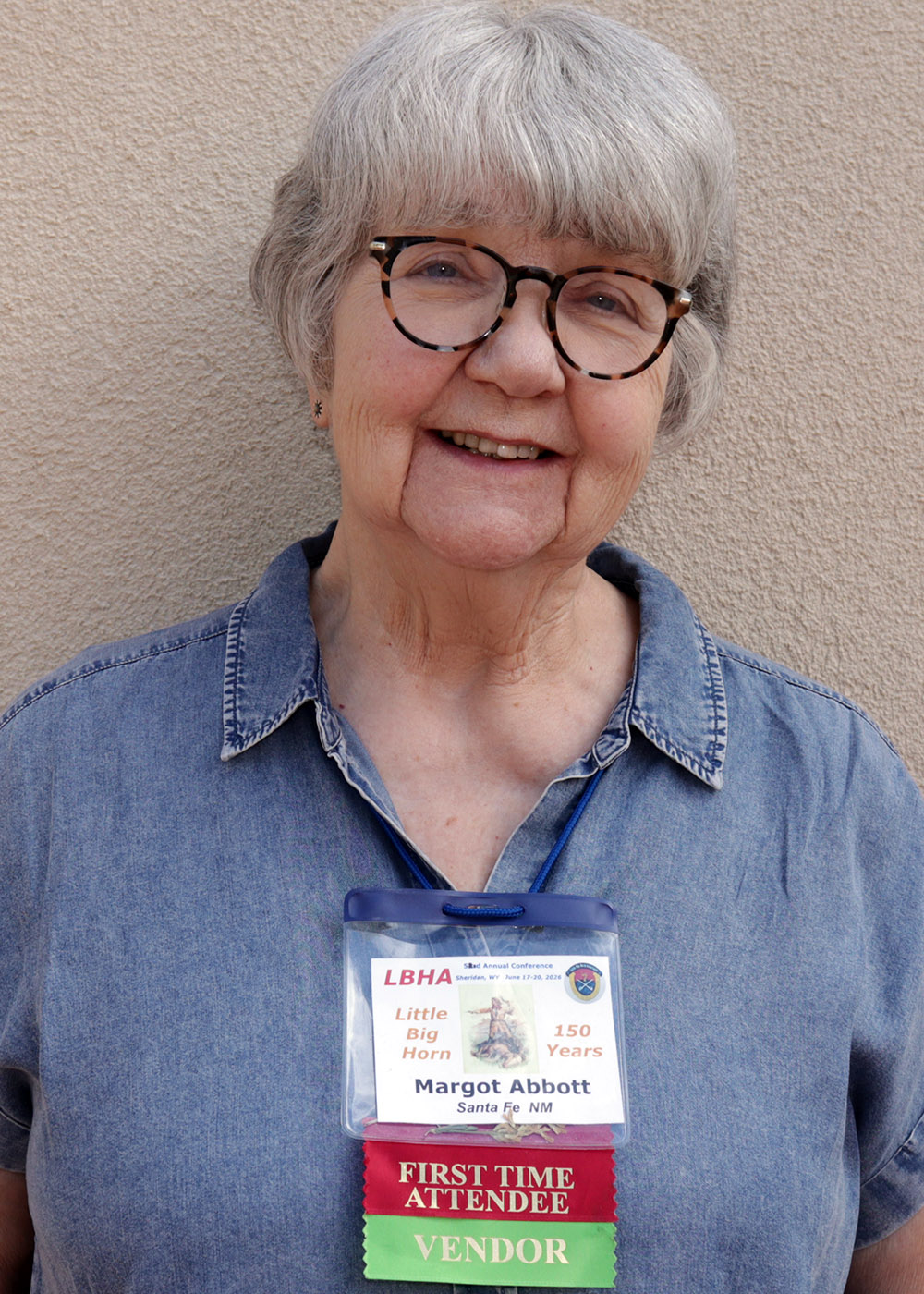
It was to be held in Sheridan, Wyoming, and I decided to go. First of all, there was a good chance that Libbie would be published this spring and second, June 25, 2026, was the 150th anniversary of the Battle. Plus, back in the 1990s, I spent quite a bit of time exploring Wyoming and enjoyed it.
I also decided to drive. I was pretty nervous about that. In May, I turned 77 and worried about having the energy to do the miles. And do them by myself. Then I was told by Rowan and Weatherford that Libbie would not be published until October or November.
Why bother? Friends had suggested I could get bookmarks or cards made, but without the publisher’s cover, what could I do? As the date to be refunded the conference fees approached, I went back and forth. I was being a wimp, a fence-sitter.
I suppose I could have thought of the general, who never shillyshallied in his life. But, actually, I thought of Libbie. Really. Trying to figure her out in order to write about her, I knew she had been a frightened, traumatized woman. For 12 years, she had fulfilled her role as Mrs. General Custer with intelligence, grace, and formidable political talent. Although there were no children (why? We don’t know.), the marriage had evolved into a partnership.
It was bad enough that her husband was lost, but also gone were his brothers and good friends. Elizabeth’s life was shattered. She had little family left, except for her stepmother and, most importantly, her cousin Rebecca, but on top of everything, she had no money. Plus the army needed her, and all the widows, gone within a month. New officers and men, new families would be moving in.
So thinking about her, my character, I knew how disappointed she would have been with me. She’d understand my reluctance to go alone and my worry about budgets, but for goodness sake, get yourself some backbone. It wasn’t like riding in an army ambulance across the plains or on horseback through Louisiana and Texas in summer. Sure, the conference attendees would probably be mostly men. Well, dress nicely, comb your hair and smile. Who knows? You might learn something.
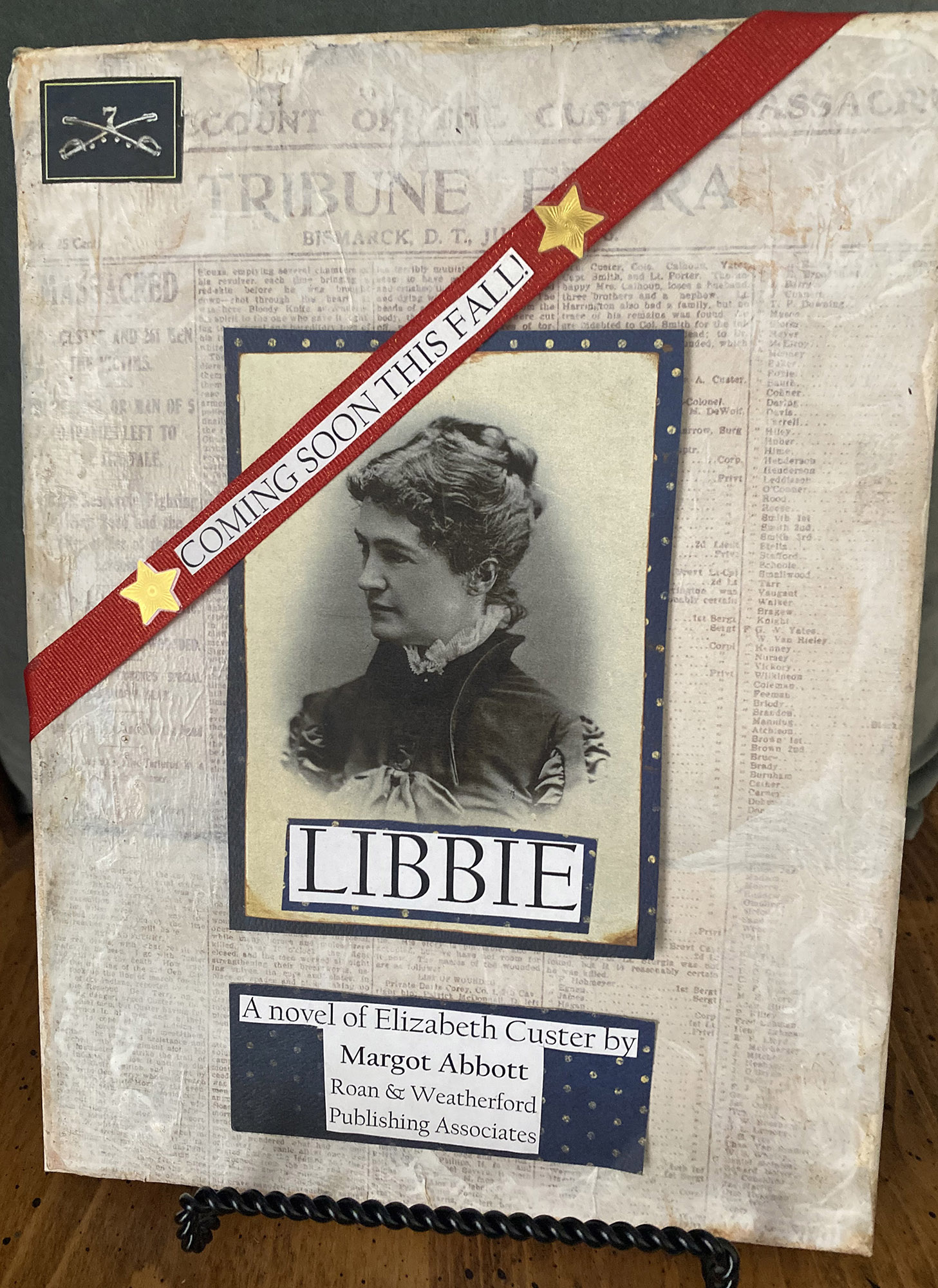
I don’t actually have a book? I made myself an advertisement! A coming soon announcement. I paid $35 for a table and gathered a box of Custer books to sell. I plotted out my drive. Up Interstate 25 to Sheridan. I asked my cousins in Denver for a bed for the night; was surprised that the distance from Cheyenne to Sheridan was so far. Decided maybe I’d drink caffeinated coffee and stop often to rest and use the facilities.
I did all this, brought crackers, cheese and apple slices, along with audiobooks. Yes, it was exhausting, but amazingly, I enjoyed myself. I liked climbing through Northern New Mexico, knowing I was tracing ancient trailways as well as the Santa Fe Trail. I hit Denver as the afternoon commutes started. That was no fun, but the visit with my Denver cousins was.
I made it to Cheyenne. Stayed in a motel near the highway, turned the AC up, and took a nap or two. I like motels, slopping around, getting ice, discovering what’s streaming on the TV.
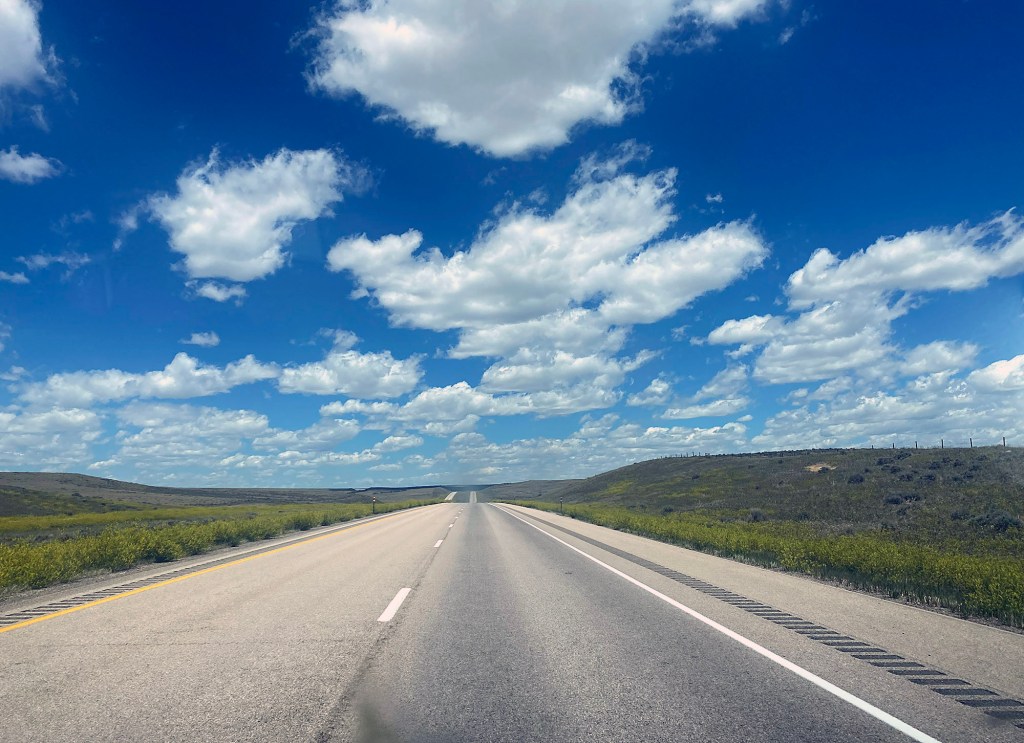
I like landscapes free of forest. I like the far mountains fuzzy in the morning mist and most of all, I love seeing forever. I liked how Wyoming looked like a bright green blanket laid over a rumpled bed.
I thought of the history of this land. How people had come to it, depended on the space and the bounty of the animals, how they developed a way of life they believed would last forever. Then came the relentless march of my people, my country.
There were so many famous battles. The beautiful rolling hills were bathed in blood. A famous historian once likened the history of the West, in particular the Battle of the Little Big Horn, to the American Iliad.
Wyoming climbs towards Montana with the Big Horns and Rockies looming to the west. It was an excellent prologue to the topics I would hear discussed for the three days of the conference. I was glad to see the countryside, to hear the lectures and to be surrounded by this small regiment of amateur historians. I almost felt that I had found “my people” except with my book written, I knew I really didn’t care where exactly Major Reno had crossed the Little Big Horn River.
Libbie never visited Montana or Wyoming. She learned about the battle from the officers she trusted, men who believed Custer had not made mistake after mistake. But above all, she believed her husband had been betrayed, leaving him and the five companies with him to die. She never forgave either Captain Benteen or Major Reno for not riding to support Custer and she especially was contemptuous of Reno.
In the 1960s, his descendants managed to have his remains moved to the National Cemetery at the battlefield. I passed his grave, paused, and for a nasty moment considered spitting at it for Libbie. I really did. I didn’t. Of course, I didn’t. After all, he was part of our history too. Libbie would just have to realize that.
 Margot Abbott
Leave a comment