The Question of Research
A funny thing happened to me at the Little Big Horn Associates Conference this past June. One evening, before dinner, there was a Custer Trivia game. I can’t remember any of the questions, but I do remember that I did surprisingly well.
I have the typical memory loss of a 70-plus-year-old and have become quite dependent on online thesaurus sites. As a friend says, the nouns are gone. But that evening, perhaps inspired by the Custer talk all around me, the answers came with no hesitation.
Go figure!
I have done tons of research. Mostly from books. But getting interested in a subject, I found it was useful—and fun—to read, watch, and listen to everything. You never know where your story comes from.
I began writing. And that’s when the research comes to the front. How historically correct do you want to be, or can you be? The Custers are exceedingly well documented. They, and most of the people in my novel, were real. A certain respect is due.
Both Custers wrote books, and hundreds of letters to each other and everyone they knew. Unlike some 19th century widows, in her quest to preserve the general’s reputation, Libbie saved everything! Newspapers, magazines, and who knows how many books, articles, and movies have followed. Getting into this subject is definitely falling down the rabbit hole. I did not use the internet for my primary research. But when I need a specific fact or photo or explanation, that’s the easiest place to look.
For example, I decided to create a scene that on the train carrying Libbie and the other new widows home to the States. This was about a month after they had been told the news of the battle.
The new widows were not going to the same destination, but Libbie, her sister-in-law, Maggie Calhoun, and Custer’s niece, Emma Reed, were going home to Monroe, Michigan. Annie Yates had her three small children with her and she decided to stay in Monroe.
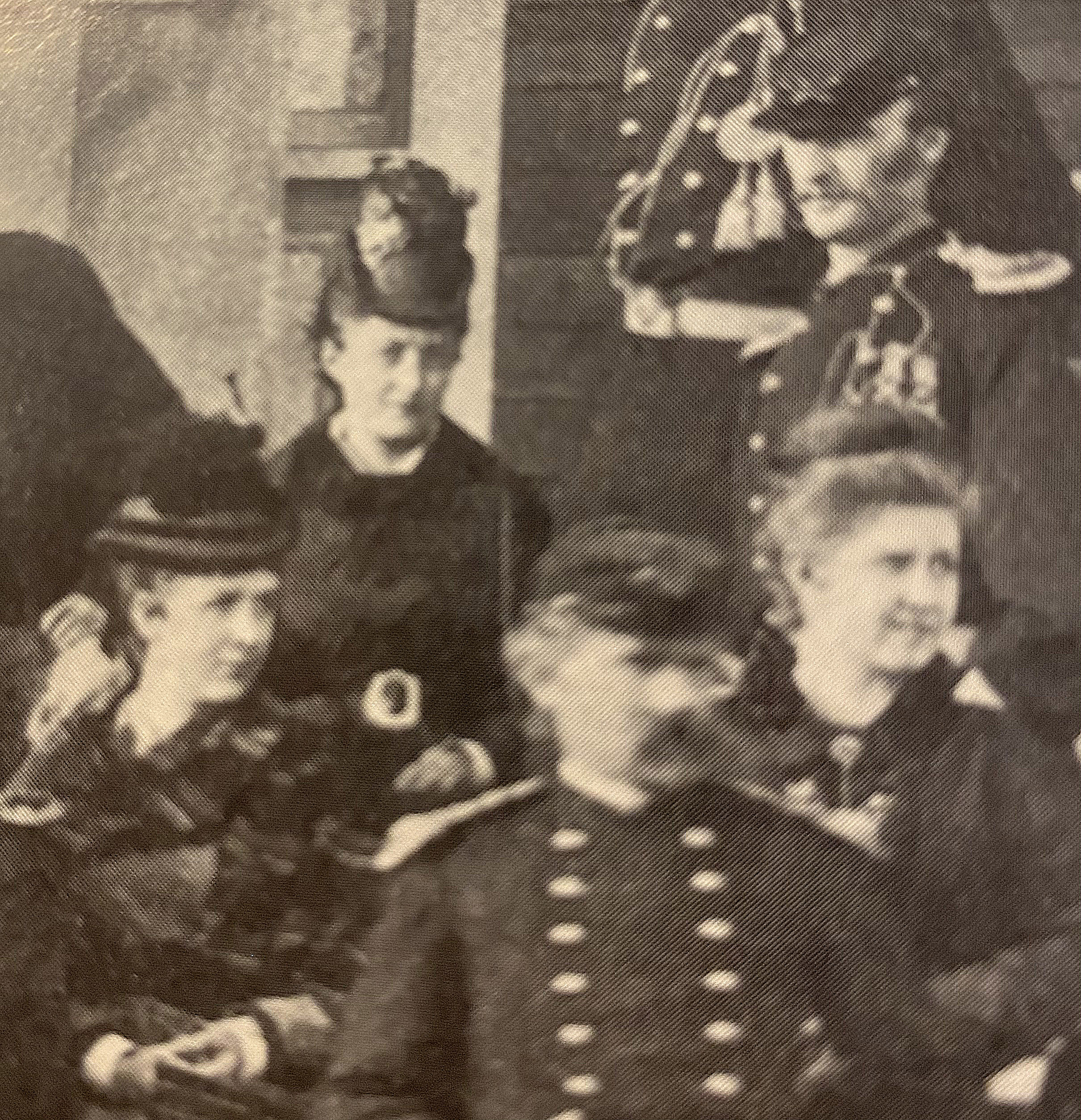
Maggie Calhoun, Annie Yates, and Lottie Moylan (whose husband was a survivor). Above Lottie is Tom Custer. Click image to enlarge.
It occurs to me that I never did the research to discover why she didn’t go to her family. After Libbie moved to New York—yes, she did!—Annie went back to her people in Carlisle, Pennsylvania. I assumed it was because of their close relationship. Also, Annie had been pregnant when she got the news and lost the baby within a week or so. A subject for another discussion: that is, the lack of doctors on western forts who knew anything about gynecology or pediatrics.
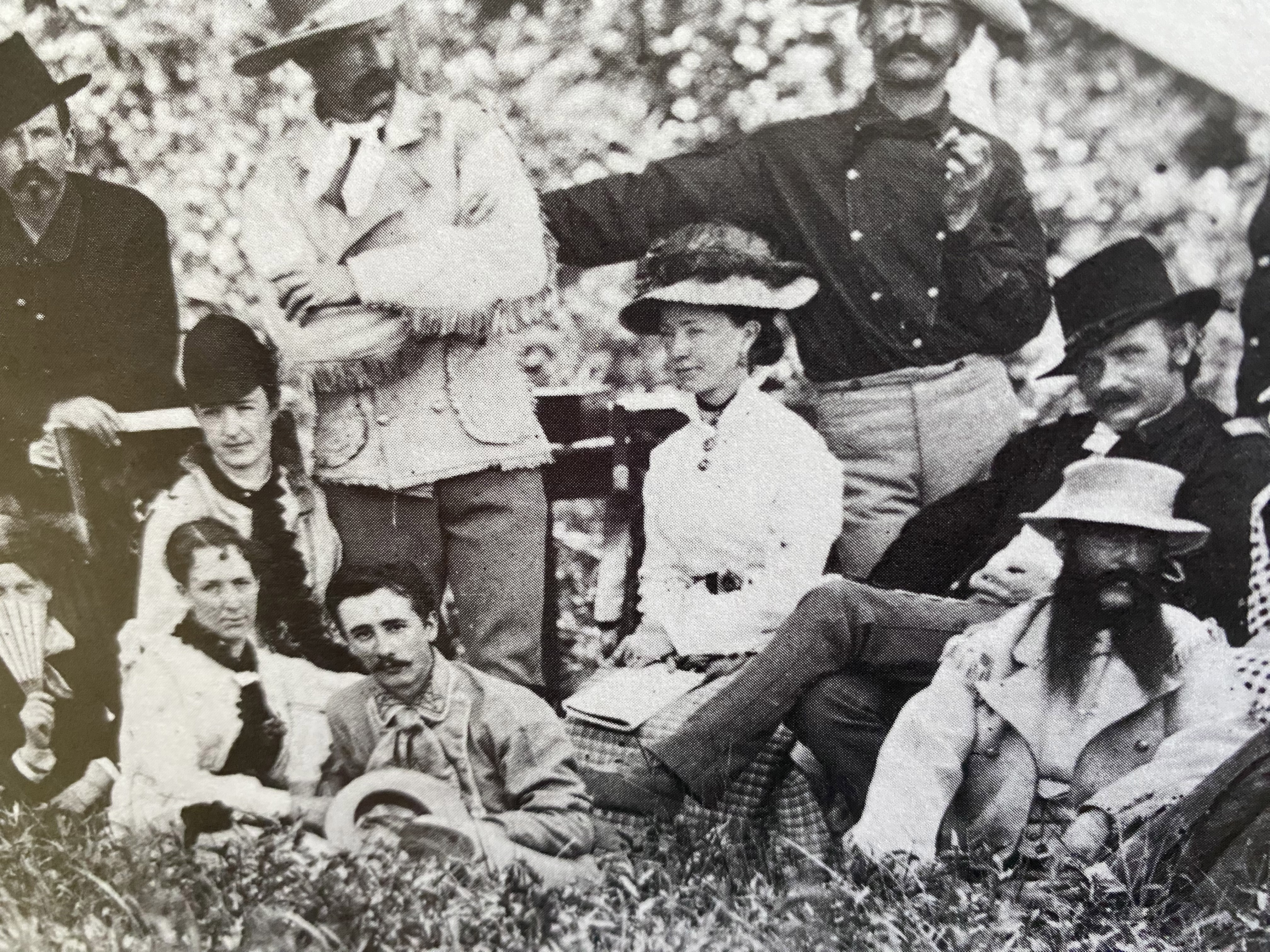
Libbie Custer (in dark hat), Maggie Calhoun (in front of Libbie), Nettie Smith (in white hat). Click image to enlarge.
Of the three additional officers’ wives, Nettie Smith went to her family in New England; Molly McIntosh to hers in Washinton, DC; and Mrs. Porter, with her two small children, had already gone back her people in New England in July.
She had only been at Fort Abraham Lincoln for a short time, so the other wives did not know her as well. Frankly, I could not find a lot about her so decided I would cut her. Perhaps it’s kinder to say, I wouldn’t use her. Anyway, she wasn’t on the train. Perhaps a historian could do some deep research on her for an article in the LBHA newsletter?
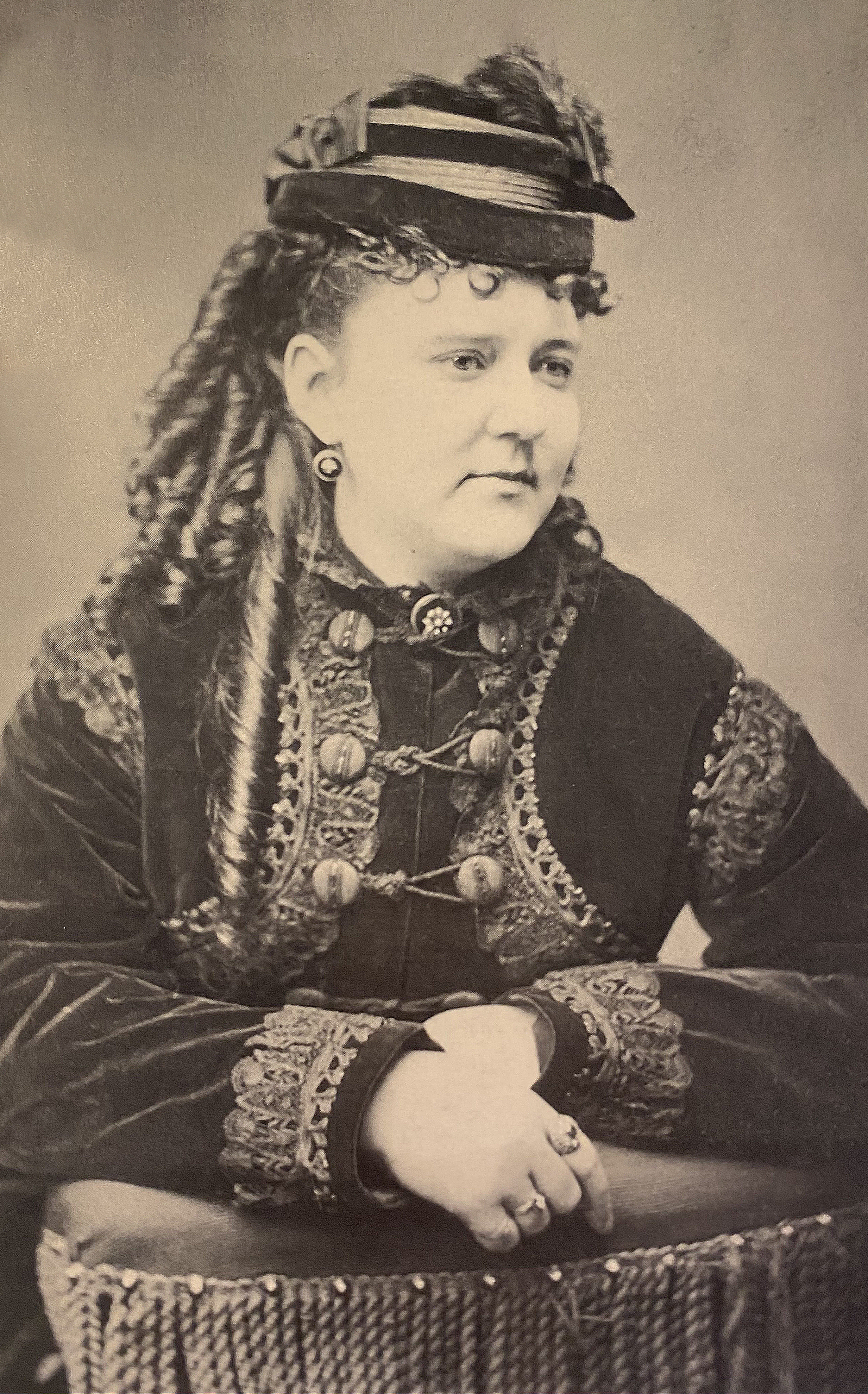
Molly MacIntosh. Click image to enlarge.
I have my cast of characters. I want to put them all on a train for almost a week-long journey from North Dakota to Michigan in August 1876. Having written a few chapters and having done hours of thinking about the women, I imagined them. It is two months since they got the news not only that their husbands—and many of their friends—were dead, but as “army crows” they needed to pack up and leave their homes ASAP!
So, what about this train? How much does it matter?
It is fact that the Northern Pacific sent a special car to Bismarck, which was across the Missouri River from Fort Abraham Lincoln. I found a map online of the NP line from Bismarck to the east. It ran almost straight into Minnesota and on to Chicago, where they would transfer to other lines.
Their car was described it was a “Special Car.” It evidently was a Pullman with the pull-down beds, rather primitive restrooms and a stove for warmth. In an old article from “American Heritage” magazine I found great photos about crossing the continent. I will admit, I did not do any more research on the train, going along with the magazine article and whatever information I could find about the pull-out beds.
I did look for dates. When did they leave Bismarck and how long did it take to get to Chicago? That was where the Monroe-bound group separated from Mollie and Nettie. I mapped out the trip, then got an 1876 calendar from the internet. In my notes were actual dates of when they reached Fargo and Chicago. The news had spread across the country in a few days and crowds met the widows at every stop. Plenty of newspaper reporters too, of course.
So does the type of train or the actual dates matter? Well, yes, to a point. If the historical facts are available, good. But the real question is: what was that trip like, in a car full of grieving people?


Leave a Reply